

by DAVID KIRICHENKO
Having survived a brutally cold winter, Ukraine has entered spring with hard-won momentum and renewed leverage.
While Russia begs for a “Victory Day” ceasefire, Kyiv is exporting the mil-tech strategies and technologies it forged under fire. Ukrainians are dealing. The Kremlin is reeling.

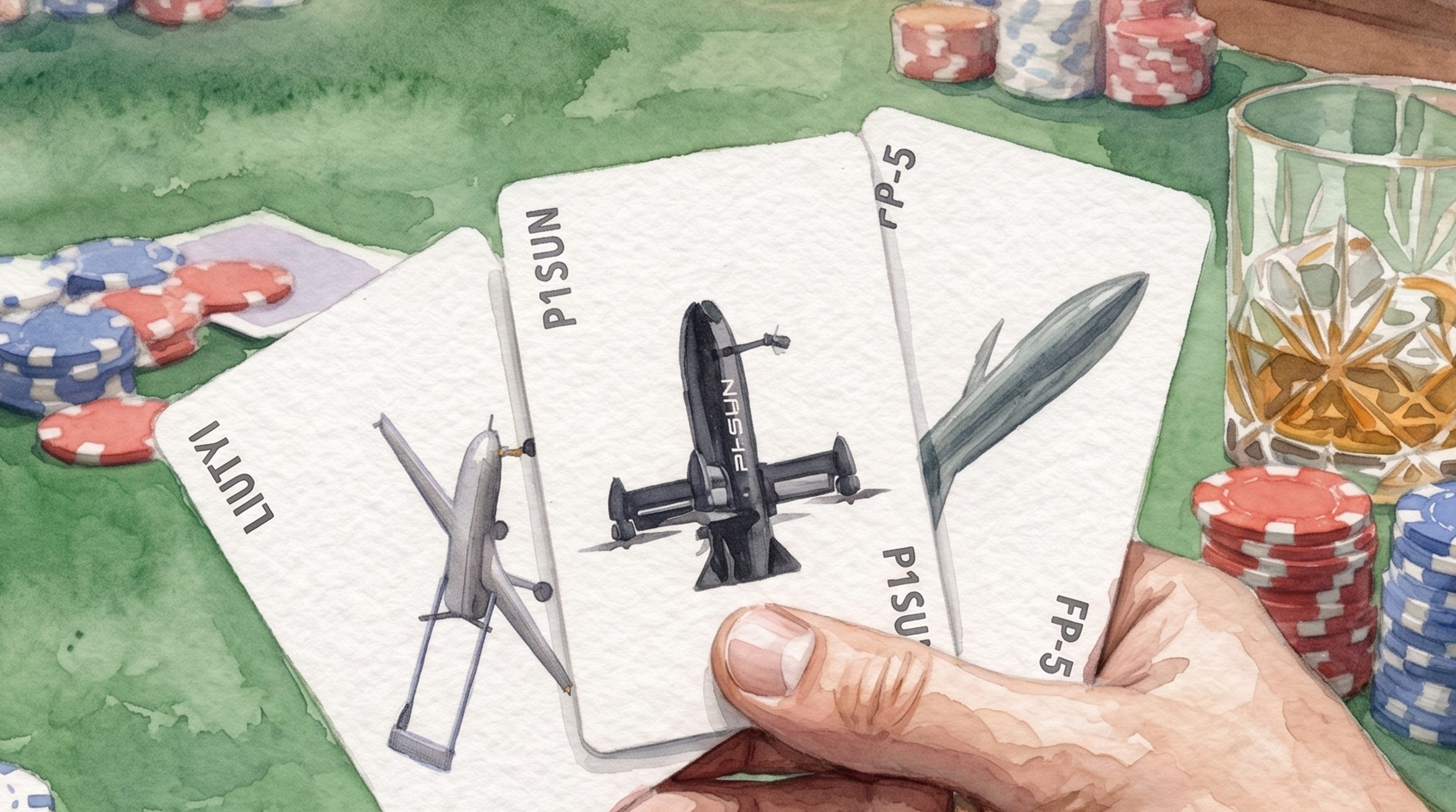
America’s attention has shifted toward the Middle East, but even as the American war with Iran pulls Washington’s focus away from Europe, Kyiv is finding new sources of leverage. Volodymyr Zelensky, once accused by Donald Trump of having no cards to play, is suddenly finding several in his hand: long-range drone strikes against Russia’s oil industry, growing demand for Ukraine’s counter-drone expertise in the Gulf, and a more favorable political climate inside Europe.
We publish this newsletter every day at 9:05am NYC time / 4:05pm Kyiv.
If you’re not already subscribed, why not do so now?
Former Ukrainian foreign minister Dmytro Kuleba offers a harsher reading of Washington’s hesitation. He argues that Trump rejected Zelensky’s offer to help in the Gulf because he did not want to “owe anything to Ukraine” or admit that he needed Kyiv’s help on Iran. That makes Ukraine’s search for leverage all the more urgent.
Oleg Tsarev, a pro-war Russian commentator, complained that Ukrainian drones are reaching “farther and farther.”
“The situation on the front line is, to put it mildly, not very good,” he said.
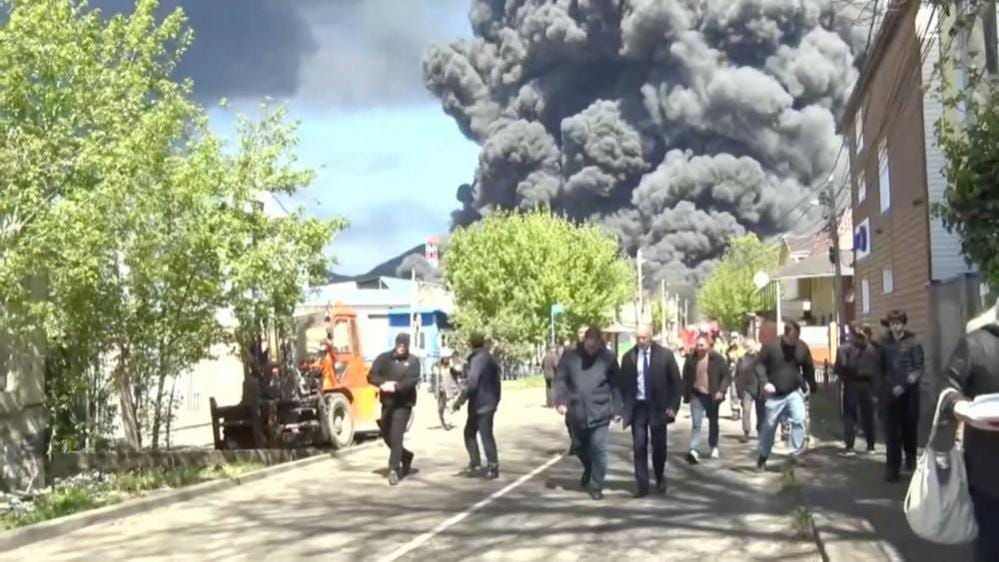
On the battlefield, Ukraine’s expanding long-range drone campaign is imposing growing costs on Russia. Strikes deep inside Russian territory are scaling the damage against oil infrastructure, eroding a key pillar of Moscow’s wartime economy. Oleksandr Syrskyi, Ukraine’s commander-in-chief, said strikes on Russian military infrastructure have caused roughly $25.5 billion in direct and indirect losses.
“Ukraine offers not just drones, but a full defense system,” Zelensky wrote on X.
“The Ukrainian drone program is at an advanced stage, enabling thousands of daily strikes against Russian personnel and an increasing number of strikes against logistics behind the lines,” says Clement Molin, an independent open-source analyst.
Russia’s north-west now features frequently in Ukraine’s air campaign. Alexander Drozdenko, the governor of Leningrad Oblast, has called his region “a front-line region” after repeated Ukrainian attacks on energy and port infrastructure. The label is revealing. Leningrad Oblast does not border Ukraine, but its Baltic ports, including Ust-Luga and Primorsk, sit roughly 1,000km from Ukraine’s nearest border and are central to Russia’s oil exports.
On the battlefield, Ukraine’s expanding long-range drone campaign is imposing growing costs on Russia.
Kyiv is also extending that campaign to the sea. On May 2, Zelensky said Ukrainian forces struck two tankers near the entrance to the port of Novorossiysk, describing them as part of Russia’s shadow oil fleet and evidence that Ukraine’s long-range campaign is expanding “at sea, in the air, and on land.”
Some American policymakers argue that Ukraine’s recent gains should be reinforced with deeper military support, including intelligence and long-range strike capabilities. Meanwhile, Ukraine’s mid-range strikes are expanding, increasingly harassing Russian supply lines deeper in the rear.
Zelensky has also framed the drone campaign as a way to break Russia’s offensive capacity, not merely slow it. Citing captured Russian General Staff documents, he said Moscow itself recognizes that its forces are struggling to meet political objectives, even as the Kremlin prepares further offensives and wider mobilization.
In some Russian cities, Victory Day preparations have been scaled back or canceled. A war once packaged for Russians as television spectacle is becoming harder to keep at a distance.
What began as symbolic reach has evolved into a sustained effort to degrade revenue flows and bring the war closer to Russia’s elites.
“Ukrainian strikes highlight vulnerabilities in Russia’s economy and military, undermining propaganda claims of success and fueling public dissatisfaction,” says Serhii Kuzan, chairman of the Ukrainian Security and Cooperation Center.
The pressure is also psychological. Putin’s call for a May 9 ceasefire, tied to Victory Day, the Kremlin regime’s annual war-liturgy parade in Red Square, looked less like confidence than anxiety. In some Russian cities, Victory Day preparations have been scaled back or canceled. A war once packaged for Russians as television spectacle is becoming harder to keep at a distance.
Ukrainian drones have been reaching the Moscow region in recent days, forcing Russian authorities to treat even Victory Day ceremonies as potential targets. Then, overnight on May 4, a Ukrainian drone reportedly struck Mosfilm Tower, a luxury high-rise in central Moscow, roughly six to seven kilometers from the Kremlin. The Kremlin can no longer fully insulate its most symbolic spaces from the war it started.
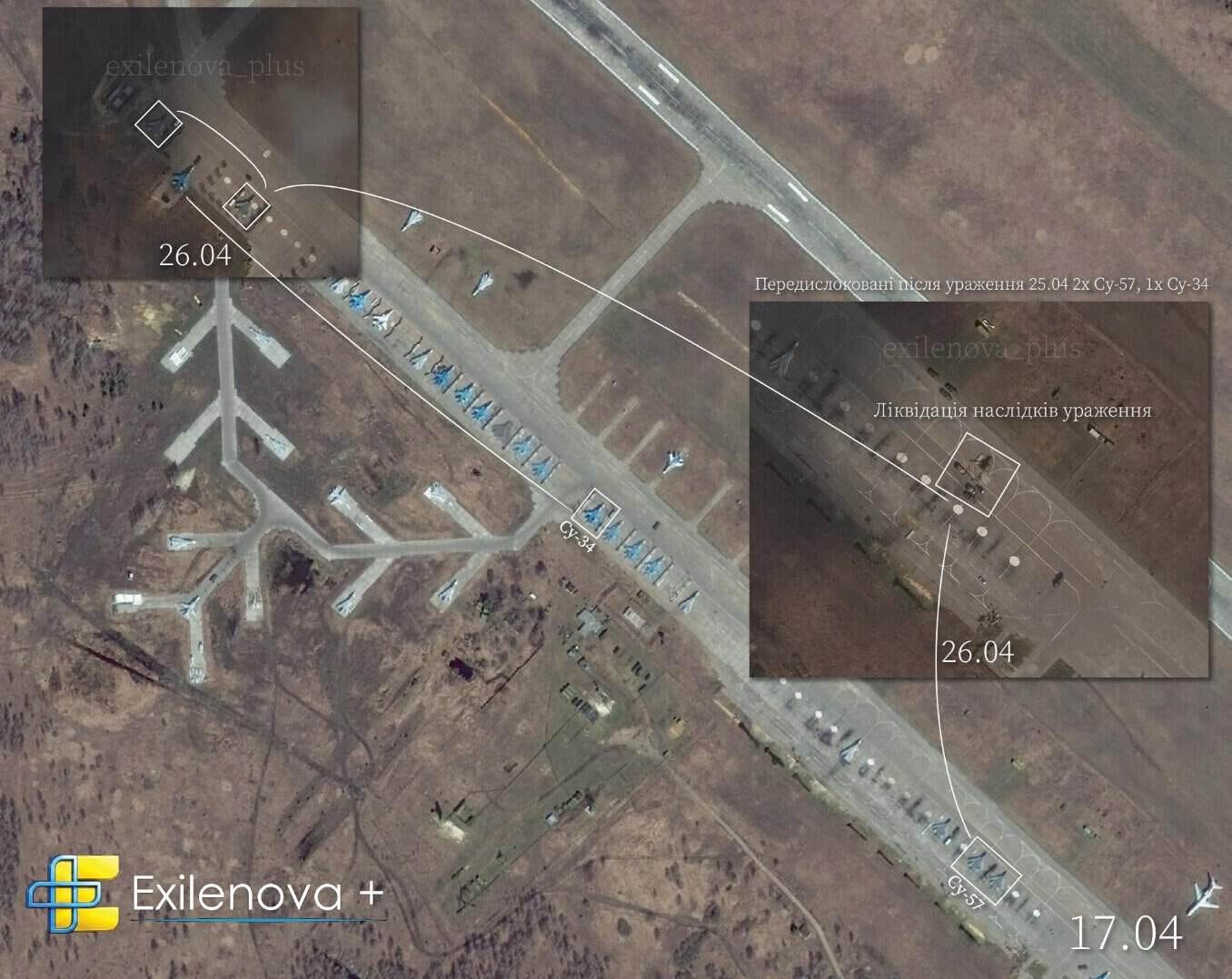
Kyiv also continues to pierce Russia’s systems deep behind the front. Ukraine’s General Staff said its Unmanned Systems Forces struck aircraft at the Shagol military airfield in Chelyabinsk Oblast, about 1,700km from the Ukrainian border, on April 25. Ukraine’s drone command said the targets included two Su-57 fighters, a Su-34 fighter-bomber and another Su-series aircraft.
Some pro-war Russian commentators have also begun to complain about strain inside Russia’s own military system. The milblogger Romanov has claimed that Russian air defenses face missile shortages, including for Pantsir systems.
Recent Russian commentary has described a broader change in public mood: fading economic optimism, weaker everyday patriotism, and a growing sense that the war is no longer moving toward victory.
Oleg Tsarev, another pro-war Russian commentator, struck a similar note. “The situation on the front line is, to put it mildly, not very good,” he complained, adding that Ukrainian drones are reaching “farther and farther.”
That unease now extends beyond the pro-war fringe. Recent Russian commentary has described a broader change in public mood: fading economic optimism, weaker everyday patriotism and a growing sense that the war is no longer moving toward victory.
Even establishment figures are warning of strain: Gennady Zyuganov, Russia’s Communist Party leader, has reportedly said that without urgent measures the country could face a crisis reminiscent of 1917. Ukrainian lawmaker Oleksandra Ustinova has made a similar point from Kyiv’s vantage, arguing that Putin’s grip on power is less secure than it appears, as shown during the Prigozhin mutiny in 2023.
Where Washington often offers uncertainty, Zelensky has worked to present Ukraine as predictable.
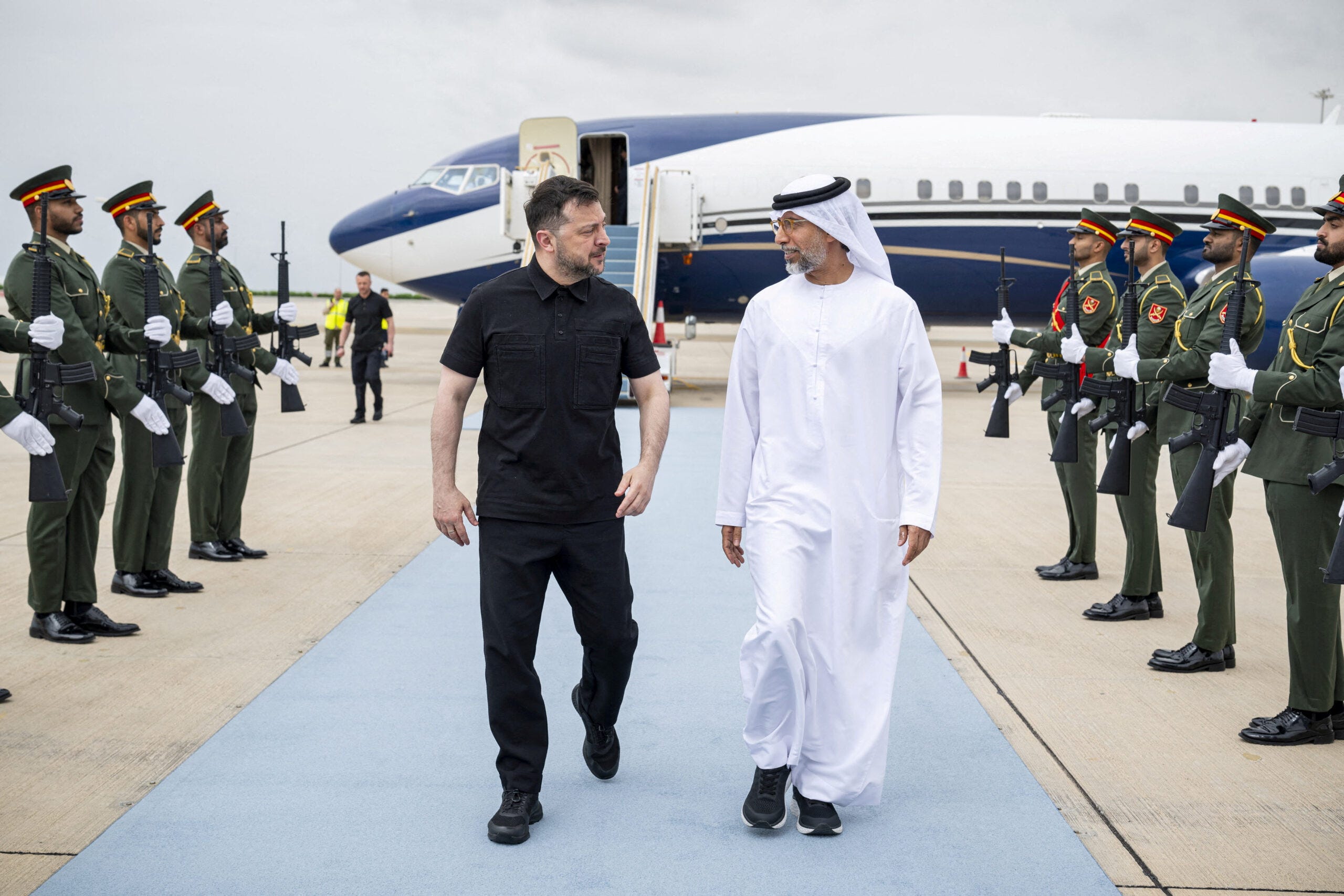
At the same time, Ukraine’s role as a security exporter is beginning to take shape. As Iranian-supplied drones have struck targets across the Gulf, countries such as Saudi Arabia have looked to Kyiv not merely as a recipient of aid, but as a potential partner.
“Ukraine offers not just drones, but a full defense system,” Zelensky wrote on X.
But Ukraine’s advantage is not always the hardware itself. The real export is know-how.
Ukrainian expertise in counter-drone warfare, honed under constant attack, has become a valuable commodity. This shift hints at a broader transformation: from dependent ally to niche security provider. The trend is already visible in Europe: The Economist noted that European and Ukrainian companies signed more than 20 defense agreements in 2025, nearly twice as many as in 2023.
Kyiv has also begun restoring ties with Syria, a former Russian client state, exploring trade and even potential security cooperation. The move is less about Damascus itself than what it represents: Ukraine stepping into spaces where Russia’s influence is fading.
Meanwhile, TAF Industries, a Ukrainian drone maker, has received a request from a shipowner to provide experts and anti-drone systems to protect a vessel passing through the Strait of Hormuz, where Iranian drones are a growing threat. Where Washington struggles to reassure, Kyiv sees an opening.
Kyiv’s diplomacy is also becoming more transactional and disciplined. Where Washington often offers uncertainty, Zelensky has tried to present Ukraine as predictable: a partner bringing concrete security solutions in exchange for the support it needs.
But Ukraine’s advantage is not always the hardware itself. Much of its drone ecosystem is built from commercial or hobby-grade components, adapted under battlefield pressure. The real export is know-how.
That view is gaining ground among Western security figures. David Petraeus, the former CIA director, has argued that Ukraine could become the most important military-industrial complex in the free world.
Political winds in Europe are also becoming more favorable. The defeat of Viktor Orbán in Hungary removes one of the European Union’s most persistent obstacles to unified support for Ukraine. Meanwhile, leaders once seen as ambivalent, or even sympathetic to Moscow, are recalibrating.
Slovakia’s prime minister, Robert Fico, once a thorn in Ukraine’s side, has signaled support for Ukraine’s EU membership bid following talks with Zelensky. The Ukrainian president he also met Czech prime minister Andrej Babiš, another figure long viewed warily in Kyiv, to discuss bilateral ties and Ukraine’s next steps toward EU membership.
The symbolism matters. Politicians who once seemed part of Europe’s pro-Russian drag are now engaging with Ukraine’s European track. Momentum has shifted. Kyiv is turning battlefield adaptation into diplomatic and industrial leverage. The war is still brutal, but Kyiv is beginning to extract power from it.
We publish this newsletter every day at 9:05am NYC time / 4:05pm Kyiv.
If you’re not already subscribed, why not do so now?

UFN Daily Notebook—
What else we’re watching today:
The Kremlin wants Ukraine to observe a May 8–9 pause so Red Square can perform its annual mythology session without drones spoiling the choreography
Trump Agrees to Sell Long-Range Munitions to Ukraine—The U.S. has cleared a $373.6 million possible sale of JDAM-ER (Joint Direct Attack Munition - Extended Range) kits and related equipment to Ukraine, giving Kyiv more of a weapon that is simple in concept and devastating in effect: JDAM kits turn ordinary unguided bombs into precision-guided weapons by adding GPS/inertial guidance and control surfaces, while the ER version adds wings so the bomb can glide much farther after release.
The package includes up to 1,200 KMU-572 and 332 KMU-556 guidance kits, with Boeing as the main contractor, allowing Ukrainian aircraft to launch accurate strikes from greater standoff distance instead of flying directly into the densest Russian air-defense zones. For Ukraine’s air force, still operating under heavy Russian air defense pressure, that means more ways to hit logistics hubs, command posts, depots, troop concentrations and other high-value targets with scalable air-launched firepower.
Now, Moscow Wants Quiet—After Russian strikes on the night of 4-5 May, Zelensky accused Putin of “utter cynicism” after Russia announced a short Victory Day ceasefire and then immediately launched deadly overnight strikes across Ukraine, including attacks on energy infrastructure in Kharkiv, Pavlohrad, Dnipro, Zaporizhzhia, and Kyiv regions, with additional strikes killing emergency responders in Poltava.
The Kremlin wants Ukraine to observe a May 8–9 pause so Red Square can perform its annual mythology session without drones spoiling the choreography, while Russia keeps the option of terrorizing Kyiv if the show is disrupted. Kyiv’s answer was exactly what it should be: a real ceasefire can start now, not when it becomes convenient for Putin’s parade calendar.
After King Charles’s Visit, Trump Praises Ukrainians As Best Fighting Force in Europe—In an interview with MAGA-friendly Salem News Channel, President Trump at last recognized Ukraine as the formidable fighting force it is. Calling President Zelensky’s strategic efforts in the Gulf states “cunning,” Trump acknowledged the most important thing: Ukraine can fight.
In the same interview where he discussed Zelensky’s offer to help Gulf states with anti-drone capabilities, Trump said Ukrainians are able to fight “regardless of whether their equipment is great or not so great,” and added that they have held Russia back “for a very long time.”
This is a major messaging shift. Ukraine is no longer being described merely as a country waiting for American rescue, but as a hardened military power with combat experience that now has value beyond its own war. WATCH:Rheinmetall Goes Full Arsenal Mode
Germany’s defense industry is finally starting to look less like a museum of good intentions and more like an arsenal: Rheinmetall says it has pushed annual artillery-shell output from roughly 70,000 rounds before the war to 1.1 million, lifted medium-caliber ammunition production from 800,000 to 4 million rounds, and expanded military truck production from 600 to 4,500 vehicles a year.
The company’s claim that Germany has now overtaken the U.S. in conventional ammunition capacity still needs independent verification. Rheinmetall now employs 44,000 people, wants 70,000 by 2030, and is building or expanding facilities from Lower Saxony to Hungary, Romania, Lithuania, and Ukraine. The amusingly bitter twist is that Germany’s struggling car-industrial base may now find some of its future in shells, trucks and armored systems.

