

The Wrong Lesson From Ukraine
Washington thinks the lesson is drones. The drones are the symptom—the ecosystem is the point, as a little conference in North Carolina made clear.
by DAVID KIRICHENKO
The drones were never the lesson. The lesson is what happens when people are free to innovate fast.
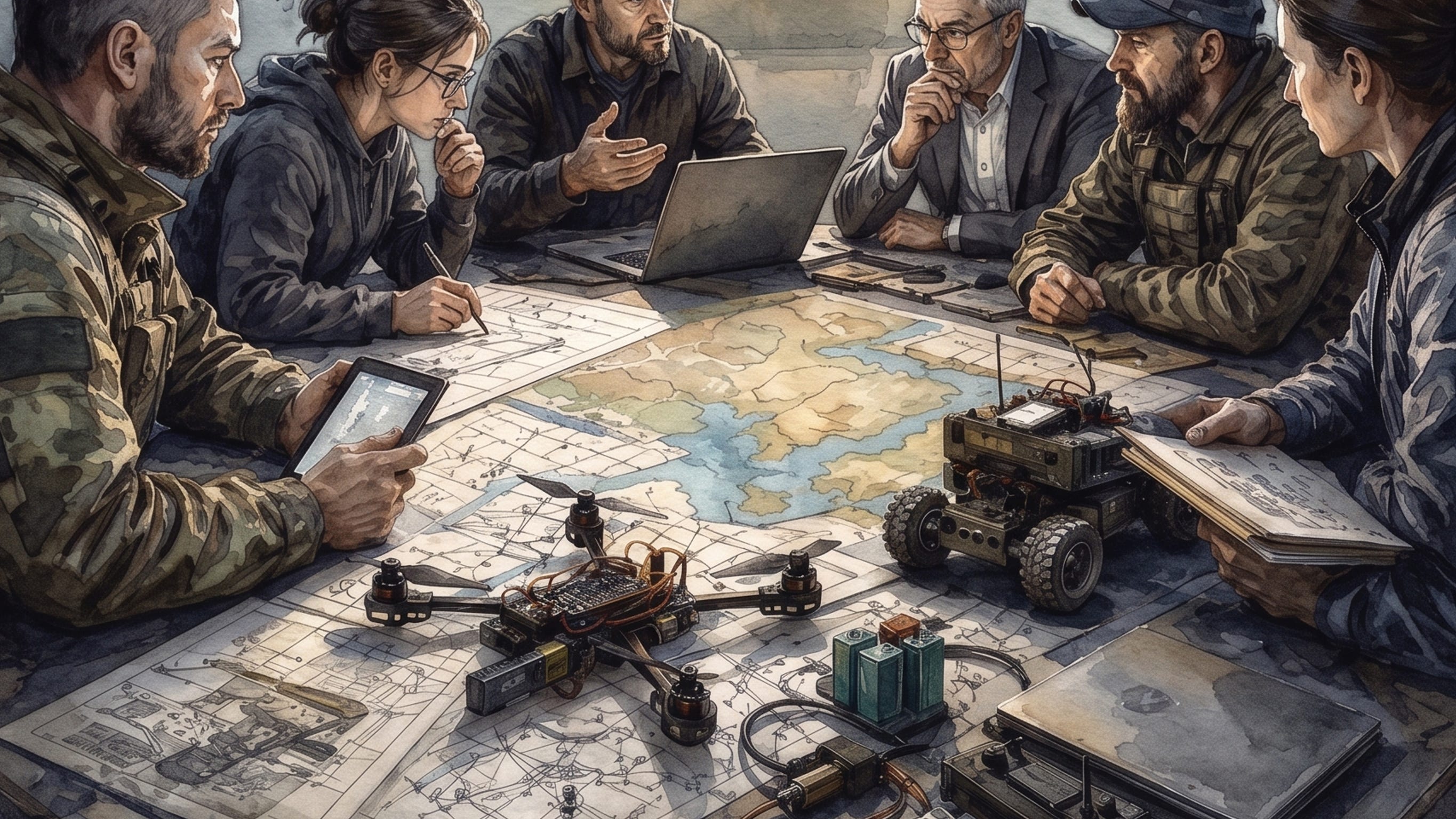
While official Washington misses the point, a group of warriors, veterans, and other experts who actually know modern warfare gathered at a conference called Meridian Forge in North Carolina. Here’s what they shared.

I’ve attended enough conferences to know the formula.
A ballroom full of panels. The same experts recycling familiar talking points. Attendees rushing between five-minute networking conversations before exchanging business cards they’ll never use.
We publish this newsletter every day at 9:05am NYC time / 4:05pm Kyiv.
Your subscription fuels our work.
Meridian Forge, an invitation-only defense technology gathering held earlier this month in North Carolina, felt different.
“I gave him a list of people who genuinely understand Ukraine”
The conference brought together roughly 100 special operations veterans, defense founders, investors, technologists, intelligence professionals, and policymakers. But what stood out wasn’t who attended, but rather, it was the atmosphere.
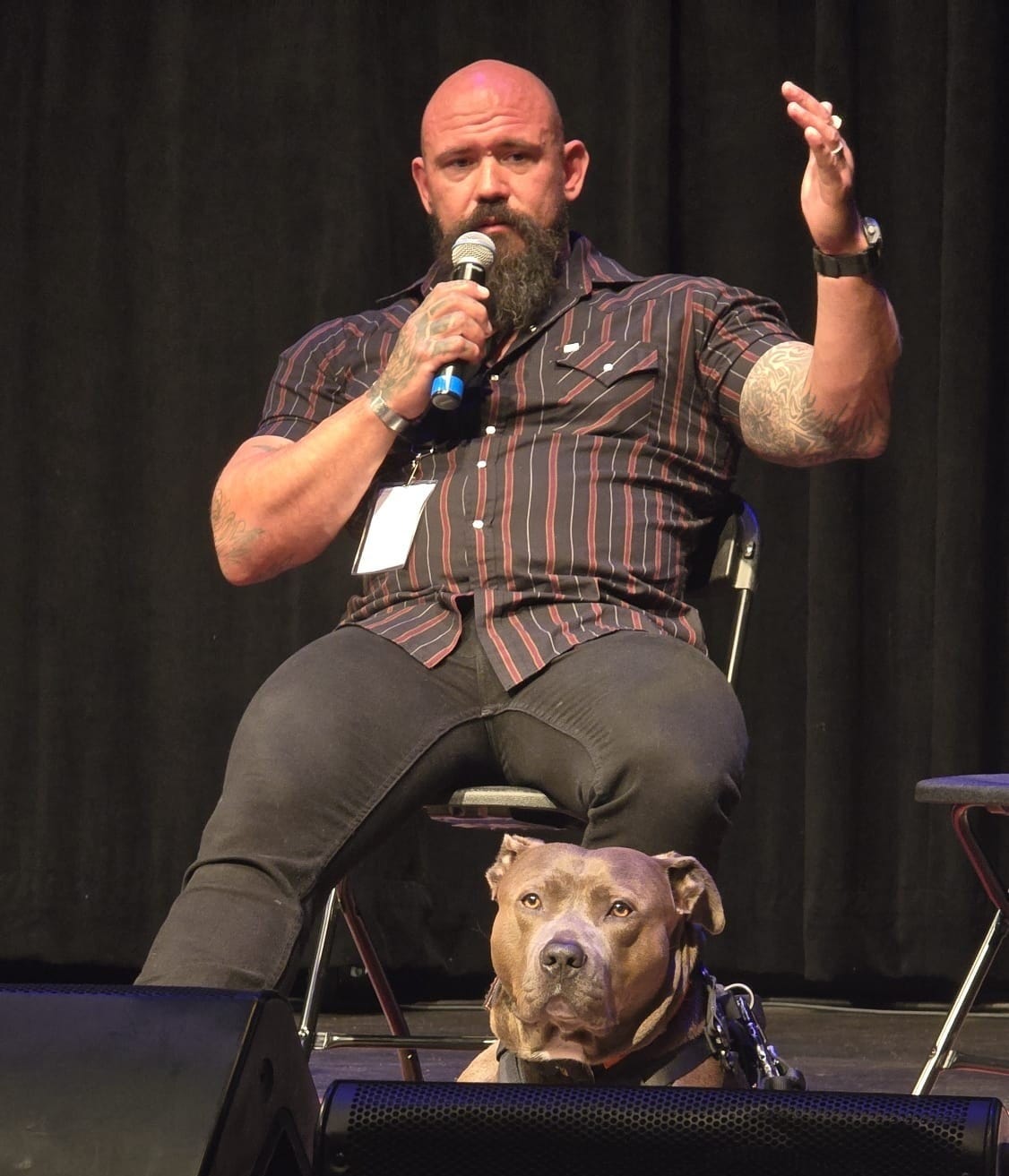

Conversations often lasted hours, not minutes. Operators sat alongside startup founders. Investors compared notes with engineers. People weren’t there to market themselves. They were there to solve problems.
The most visible lesson from Ukraine has been the rise of drones. Gagnard worries policymakers may be learning the wrong lesson. It’s about an ecosystem, not just “drones.”
Dr. Douglas J. Davis, co-founder of the Ukrainian Alliance for Medical Exchange and Development, was among those who helped shape the event. When organizer Joseph Gagnard first began planning the conference, Davis pushed him to look beyond the usual American defense circles.
“I gave him a list of people who genuinely understand Ukraine—the drone ecosystem, military technology, and the real challenges that need to be addressed,” Davis told me.
“We wanted to show small and medium defense innovators that they can gain a real market advantage by collaborating instead of competing”
The goal was to bring together three groups that rarely occupy the same room: frontline operators, defense innovators and investors capable of scaling successful technologies.
“The idea by Gagnard was to create the anti-conference,” Davis said. “The opposite of events where people attend primarily to take photos with famous names or network around status rather than substance.”
That philosophy was visible throughout the event. Attendance was deliberately limited. Discussions operated under Chatham House Rules. The focus was not presentations but problem-solving.
“We wanted to show small and medium defense innovators that they can gain a real market advantage by collaborating instead of competing,” said Gagnard, a former U.S. Special Forces operator and the conference’s lead organizer.
“The current system rewards a handful of large players competing over the same ground,” Gagnard argued. “It quietly penalizes the collaboration that actually moves capability forward.”
The most visible lesson from Ukraine has been the rise of drones. Gagnard worries policymakers may be learning the wrong lesson.
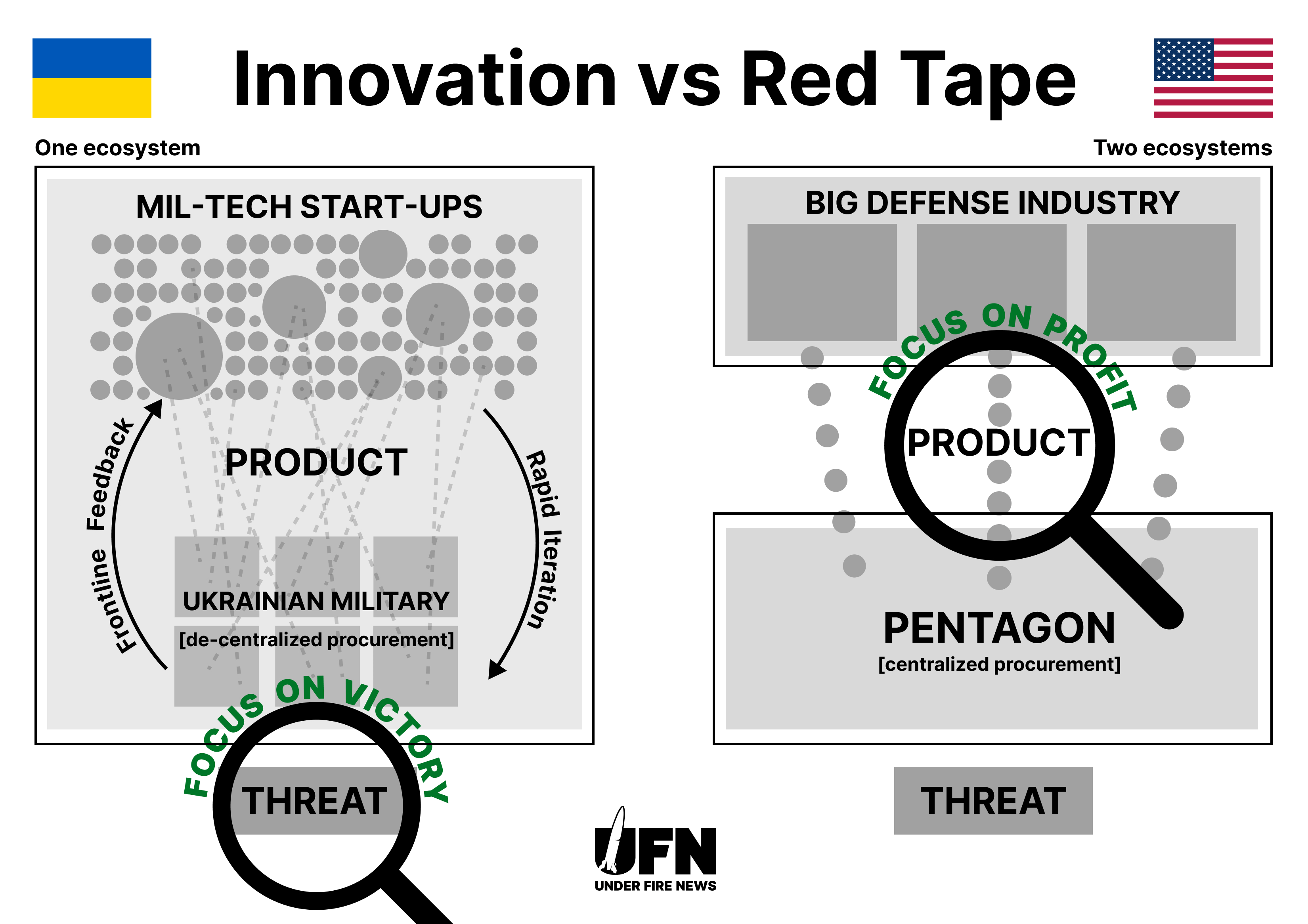
“Right now it reads as ‘we need drones,’” he said. “The hardware is the symptom; the ecosystem is the point.”
Ukraine’s advantage lies in an innovation ecosystem that moves ideas from battlefield requirement to prototype and back again in weeks rather than years.
One speaker at the event, Nils Alstad, CEO of Stridar, said feedback from Ukrainian operators directly shaped his company’s latest unmanned ground vehicles. “We have incorporated all of this feedback and used it as our product roadmap,” he told me. The process illustrates why Ukraine has become such an important catalyst for defense innovation: battlefield feedback drives rapid iteration.
“Whether Americans want to admit it or not, Ukraine is ahead of us. They are innovating doctrinally and technologically faster than anyone in the world.”
One concept discussed repeatedly during the conference was what Gagnard calls the “transition engine.” Operators provide requirements. Builders develop solutions. Contracting experts create pathways for procurement. Investors provide capital to scale successful technologies.
“No single one of them fields capability,” Gagnard explained. “The combination does.”
For Bryan Pickens, a former U.S. Army Green Beret who fought alongside Ukrainian special operations forces, the lesson extends beyond technology.
“Capability in war can only be added through technological advancement in conjunction with adequate combat-informed training,” he told me. “Without training, all the ideas and tech are irrelevant.”
Pickens believes Ukraine’s advantage is doctrinal and operational as much as technological. “Whether Americans want to admit it or not, Ukraine is ahead of us,” he argued. “They are innovating doctrinally and technologically faster than anyone in the world.”
His concern is that many Americans still view future conflicts through the lens of the post-9/11 wars. “The drone fight has made a zero-casualty war nearly impossible,” Pickens said.
Ukraine’s greatest lesson may not be about drones at all. It is about adaptation: how quickly a military can learn, innovate, and evolve under pressure.
As Washington debates procurement reform, defense budgets, and military modernization, the most important question may not be what weapons America buys next. It may be whether the United States can adapt as rapidly as its adversaries.
“We are no longer fighting in the world we knew,” Pickens said. “We are fighting in a new world where innovation defeats massive defense budgets.”
You might also find this interesting:


Your subscription fuels our work.

UFN Daily Notebook—
What else we’re watching today:

