

The Warning Fedorov Left Behind
Ukrainians now fear the recruiter with the folder and pen more than the Russian army getting closer every day.
by DAVID KIRICHENKO
Before Zelensky sacked him as defense minister, Mykhailo Fedorov gave the number: roughly 200,000 soldiers absent without leave, and some 2 million Ukrainians sought for military service violations.
Russia has proven astonishingly willing to keep sacrificing its men at massive rates. Ukraine cannot fight that way, and after four years the social contract around service is fraying.
Fedorov began by being honest about the scale of it. Now he's gone.

KNOW WHAT’S HAPPENING—SOME OF TODAY’s HEADLINES:
⚫️ Former Defense Minister Mykhailo Fedorov has publicly accused Commander-in-Chief Oleksandr Syrskyi of obstructing drone integration.
⚫️ Taiwan’s president seeks $6.5 billion for a national drone plan.
⚫️ Europeans are paying for Ukraine’s government to function. Should they have a say in Zelensky’s personnel decisions?
See the rest in our DAILY NOTEBOOK below.
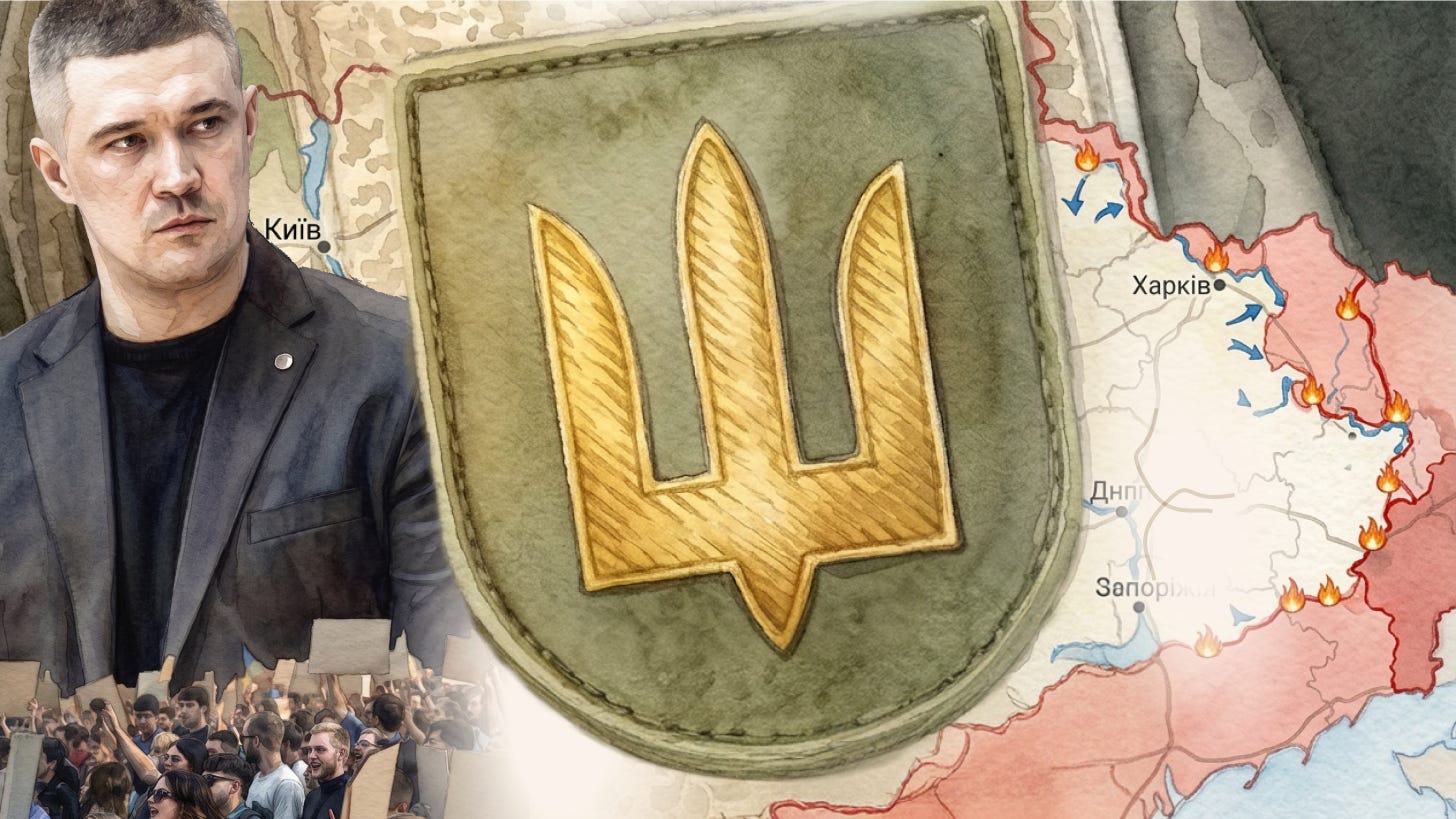
As the Russia-Ukraine war is well into its fifth year, manpower remains one of the central questions for both sides. For Ukraine, a smaller country defending a long front, drones and other battlefield innovations have helped offset some of Russia’s numerical advantage. But technology can only go so far. Holding the line, rotating exhausted troops and sustaining combat power over time still depends on mobilizing enough people for a long war.
We publish this newsletter every day at 9:05am NYC time / 4:05pm Kyiv.
Your subscription fuels our work.
This challenge is not unique to Ukraine. In a November 2023 interview with The Economist, General Valerii Zaluzhnyi, then commander-in-chief of Ukraine’s armed forces, argued that Russia had failed fully to capitalize on its manpower advantage because Vladimir Putin feared that a general mobilization could trigger a political crisis, and because Russia lacked the capacity to properly train and equip large numbers of additional troops.
Zaluzhnyi also acknowledged that he had underestimated Russia’s tolerance for casualties in pursuit of a war of attrition. “That was my mistake,” he said. “Russia has lost at least 150,000 dead. In any other country such casualties would have stopped the war.”
In a long war, trust breaks down when troops are treated as a quick fix for crises at the front rather than assigned, trained, and managed as a scarce strategic resource.

