

How Missile Interception Really Works
Air defense is now an urgent need well beyond Ukraine.

by NIKOLAUS MUCHITSCH in VIENNA
Under Fire News — Innovate to be free.
The Middle Eastern war has brought to the fore a topic that Ukrainians know all too well: Air defense.
Iran’s attacks on influential tourist destinations like Dubai have shoved sheltered Westerners into the new reality.
Don’t miss our DAILY NOTEBOOK:
Scroll to the end for the latest frontline, geopolitical, and mil-tech headlines.
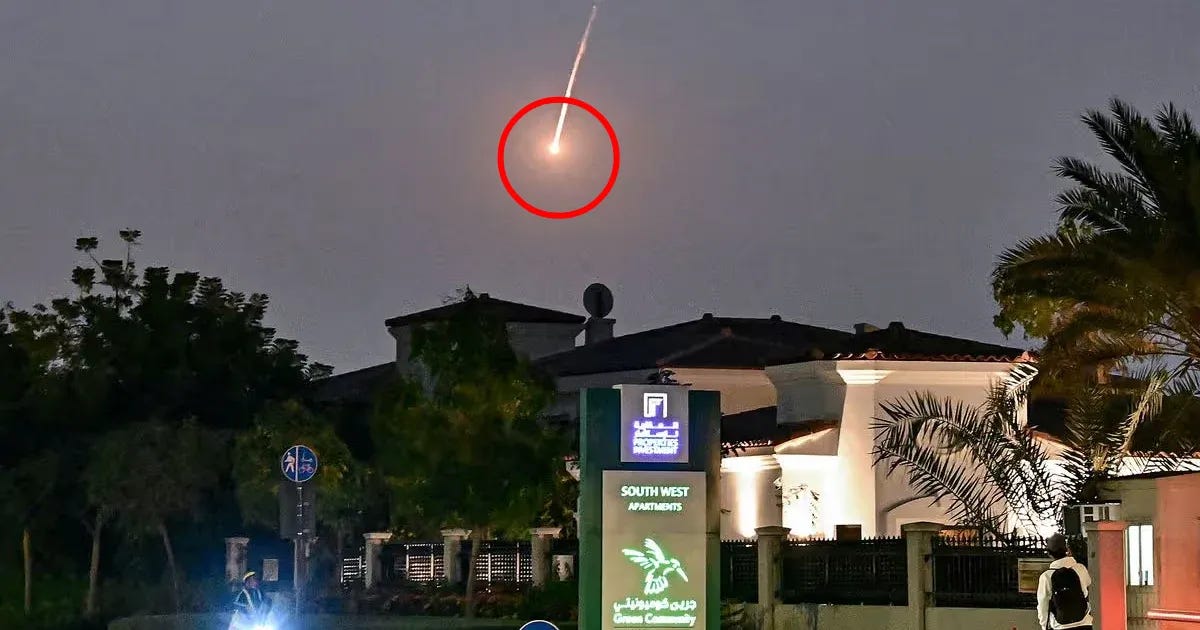
The most sure indicator that we live in uncertain times is the fact that air defense systems are currently the talk of the day at many tables in the West.
Air defense has for years been a near-nightly reality for Ukrainians, facing Russia’s ballistic missiles and Iranian-designed Shahed drones. Same for Israelis, where systems like THAAD and Iron Dome have intercepted Hezbollah or Iranian missiles and rockets. But with Iran’s attacks on Western tourist destinations like Dubai, the topic has moved beyond nations used to war and entered even the most sheltered Western mind and therefore deserves an explanation.
Would you please take a minute to support our daily work from and for Ukraine—just $10/month? Enjoy a 7-day free trial.
Missile interception is often portrayed as a perfect shield, but in reality it is more like a constantly evolving technological duel.
Behind the dramatic footage of intercepts lighting up the night sky, the process of missile defense is complex and tightly choreographed. It involves multiple layers of detection, tracking, calculation, and interception—often happening within minutes or even seconds. To understand how missile interception works, it helps to break the process down into three main stages: detection and identification, tracking and engagement, and interception, which we will examine here.
Detecting the Threat: The Role of Early Warning Systems
Missile interception begins long before an interceptor missile leaves its launcher. The first step is detecting that a missile has been launched at all. This usually happens through a network of early warning systems, which include ground-based radars, airborne sensors, and satellites.
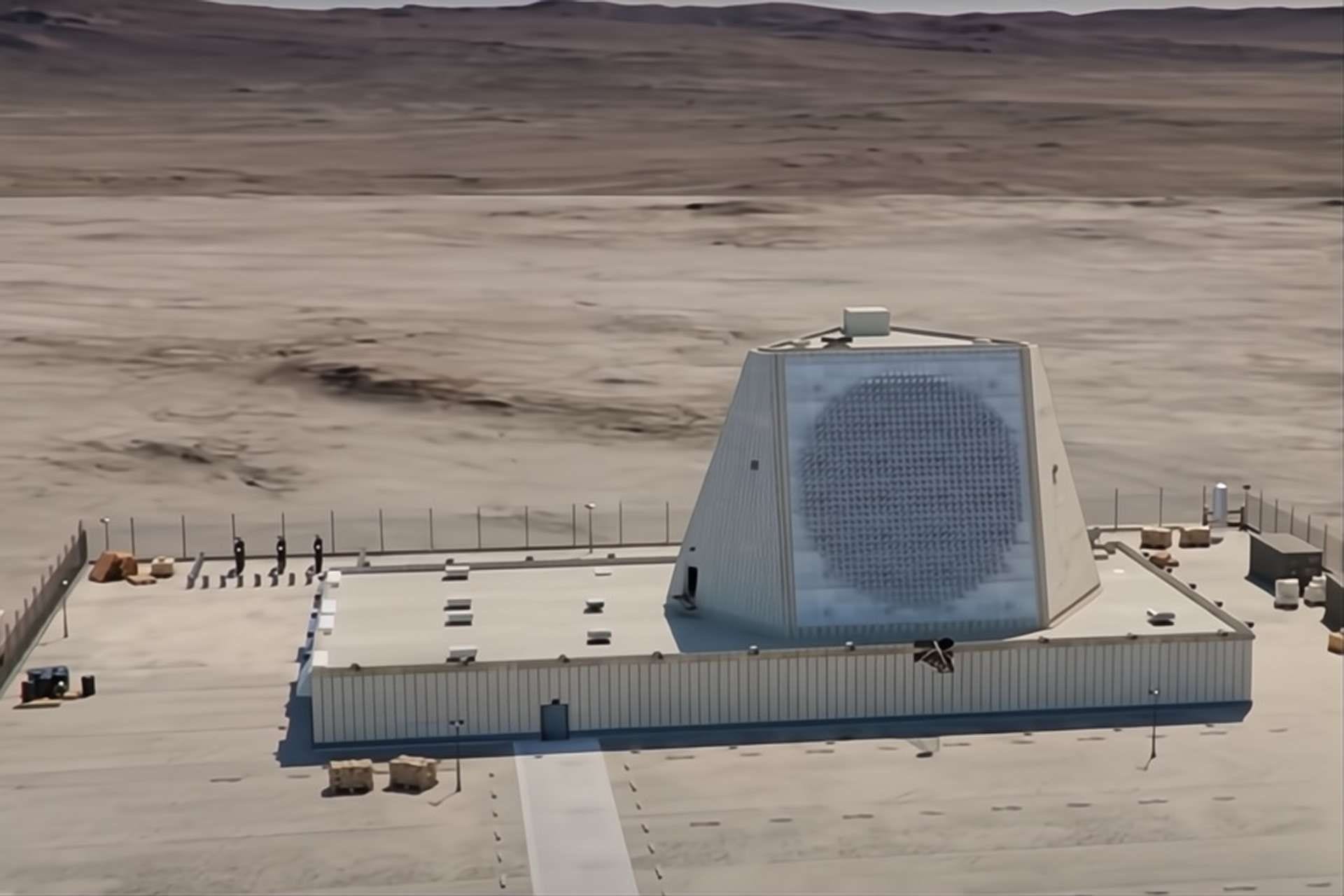
For ballistic missiles in particular, satellites equipped with infrared sensors often detect the launch first. These sensors can spot the intense heat produced by a missile’s rocket engines during its boost phase. Once detected, information is passed to command centers and ground-based radar systems that begin tracking the missile.
Radar plays the central role in missile defense. Systems such as the Patriot battery rely on advanced phased-array radars that can search, detect, and track targets simultaneously. The Patriot’s AN/MPQ-53 or AN/MPQ-65 radar uses thousands of small transmitters to steer its radar beam electronically, allowing it to scan the sky extremely quickly and track fast-moving objects like ballistic missiles or low-flying cruise missiles.
In many cases, the radar is also responsible for identifying the target. The system determines whether the object is a friendly aircraft, a hostile missile, or debris. Once the system confirms the object is a threat, the missile defense battery moves to the next step: calculating how to intercept it.
Predicting the Impact Point
Missiles move extremely fast. Ballistic missiles can travel at speeds of more than 20,000 kilometers per hour for Intercontinental Ballistic Missiles (ICBMs). This means they can cross an entire small country in minutes.
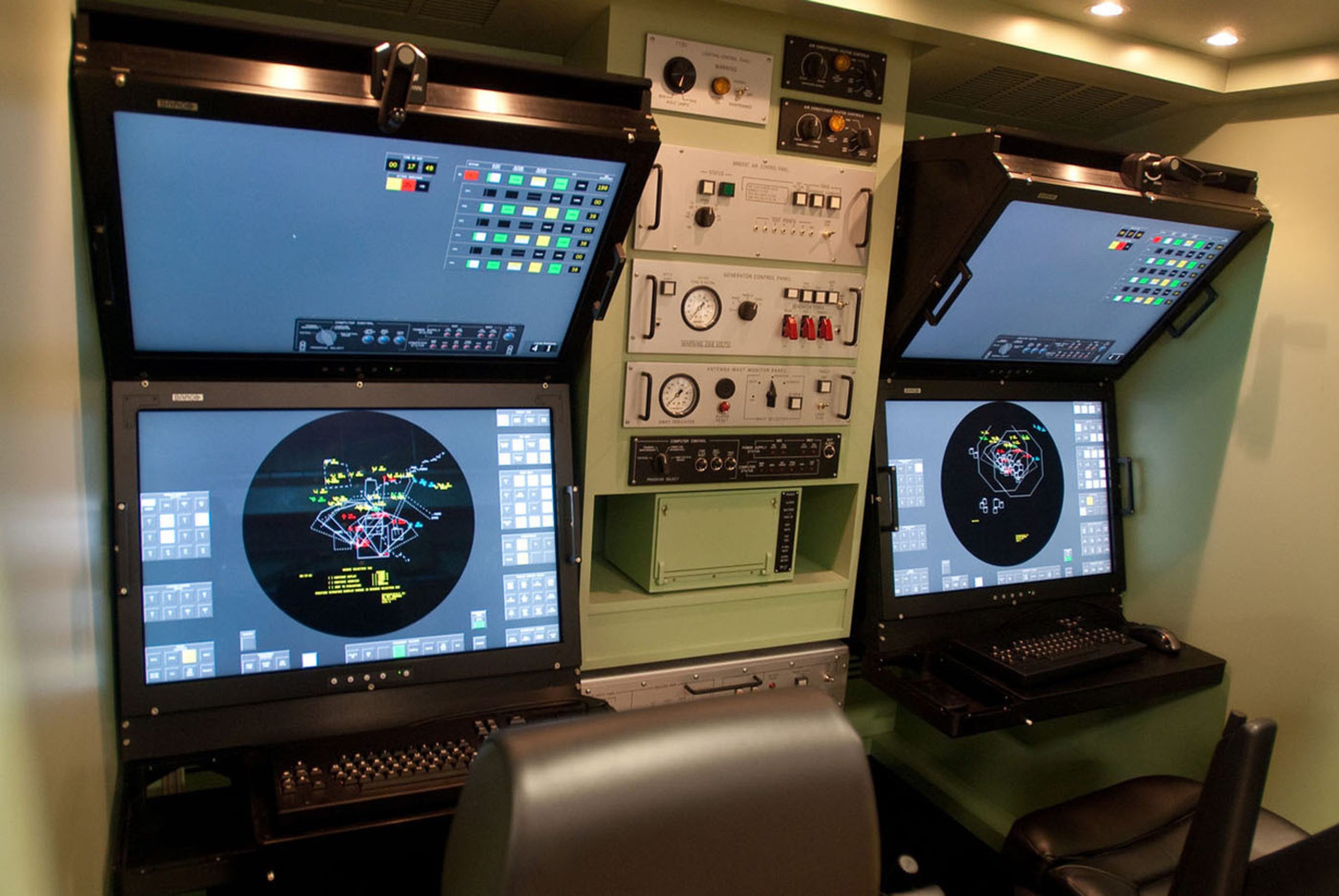
Because of these speeds, missile defense systems must quickly predict the incoming missile’s trajectory. Radar tracking data allows computers to calculate where the missile will be at any moment in time and where it is likely to hit.
This calculation serves two purposes.
First, it determines whether the missile actually threatens the defended area. Some systems, most famously Israel’s Iron Dome, will ignore rockets that are predicted to land in open areas, saving interceptor missiles for more dangerous targets.
Second, the trajectory calculation determines where an interceptor missile must meet the incoming weapon. Missile defense is essentially a high-speed collision problem: Two objects traveling several times the speed of sound must meet at precisely the same point in space.
Launching the Interceptor
Once the system decides to engage, the command unit sends a signal to the launcher. Modern air defense systems consist of multiple launchers arranged around a radar and command vehicle.
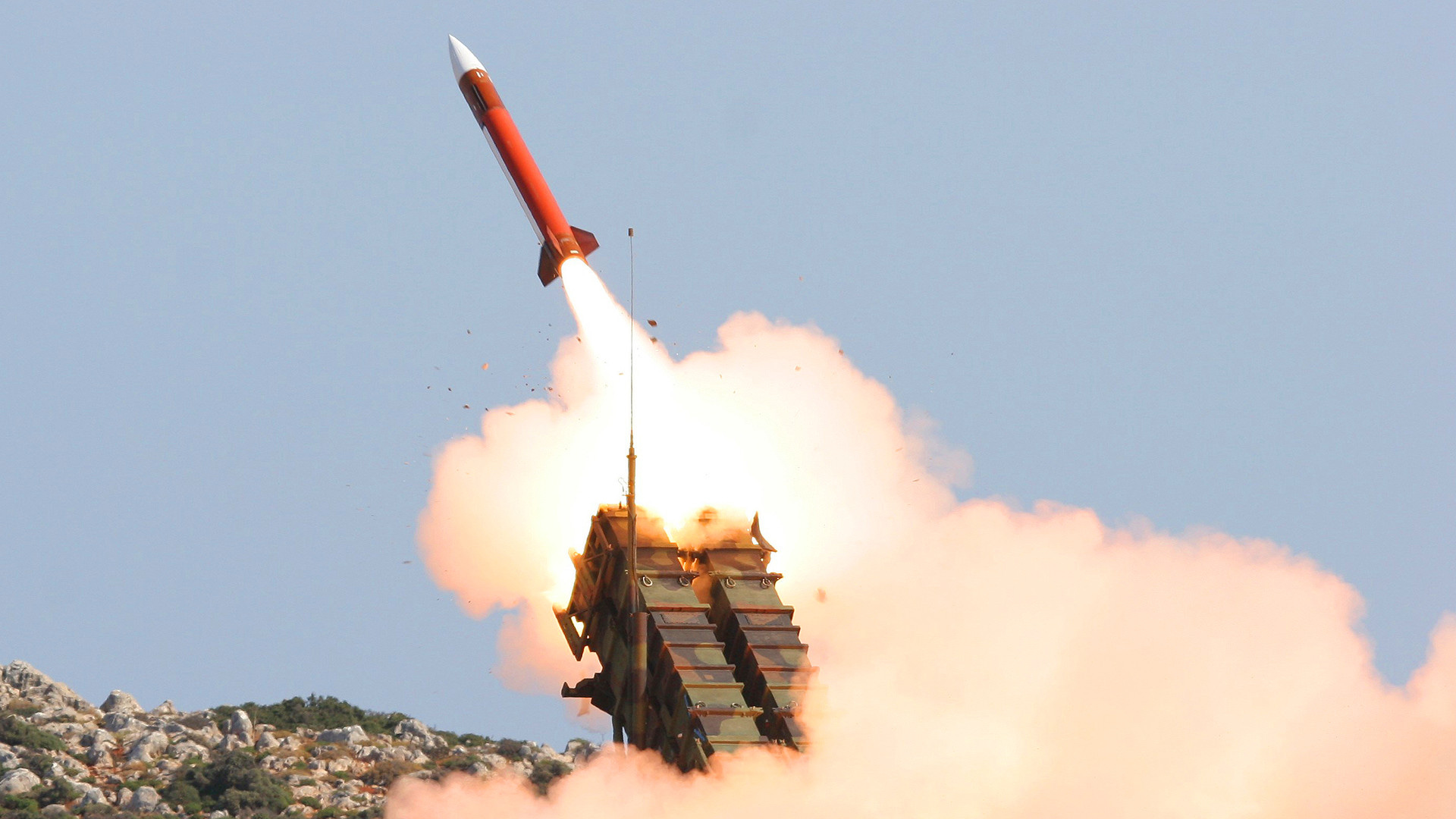
In the Patriot system, a typical battery includes radar, a command-and-control station, launchers, and interceptor missiles. These components work together as a single integrated system designed to detect and destroy incoming threats ranging from aircraft to cruise and ballistic missiles.
Do you like our Daily Notes below? Normally they are only available to paid subscribers. Join us now so you don’t miss a day of our Ukraine reports:
The launch itself happens automatically in many cases, because reaction times are extremely short—especially against ballistic missiles, where the window for interception can be only seconds during the final phase of flight.
After launch, the interceptor missile begins accelerating toward the predicted interception point.
