

“Don't Send Drones. Buy Ukrainian.“
Voices of the Fight No. 25: Perry Boyle, the Idaho investor who crawls through the rubble on his mission to fund Ukrainian mil-tech

A Russian missile nearly killed PERRY BOYLE in his Kyiv hotel. But he dragged his duffel over the rubble and went to a drone conference.
This American investor explains how Ukraine is building an entirely new system of warfare, why foreigners should stop sending drones and start buying Ukrainian, and how Ukrainians can help the free world shed Chinese components.

Welcome to Voices of the Fight—a Saturday Q&A series featuring the warriors, innovators, advocates, and volunteers standing under fire for free people.
1 | Who are you, and what’s your mission?
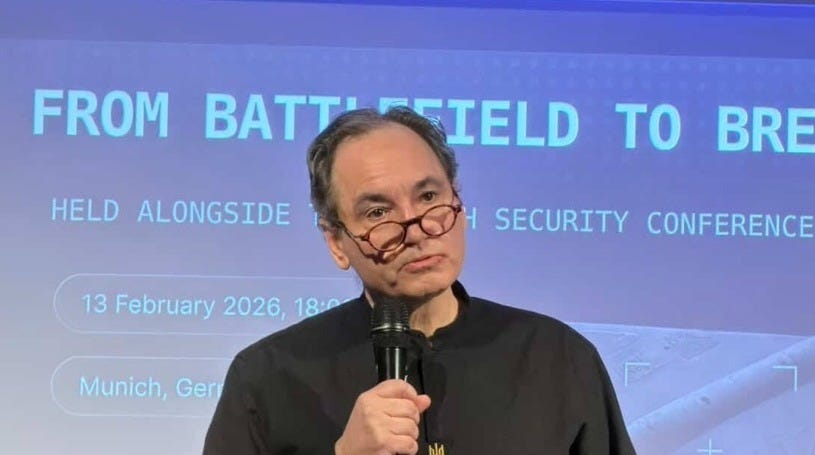
My name is Perry Boyle, and I am an American from Idaho. I am the CEO and Co-Founder of MITS Capital in Ukraine, and the Chairman and Co-Founder of MITS Industries A/S in Denmark.
We publish this newsletter every day at 9:05am NYC time / 4:05pm Kyiv.
Your subscription fuels our work.
My mission is to defend democracy against autocracy. The mission of MITS Capital is to help get Russia out of Ukraine by investing in the tools that Ukrainian warfighters tell us will advance that aim. The mission of MITS Industries A/S is to keep the Russians out of the rest of Europe by integrating Ukraine into Europe’s defense architecture.
‘[I was] pissed off that that f****r Putin had almost killed me before I could have an impact.’
2 | Tell us one powerful story from your experience in war, as you would tell someone over a drink.
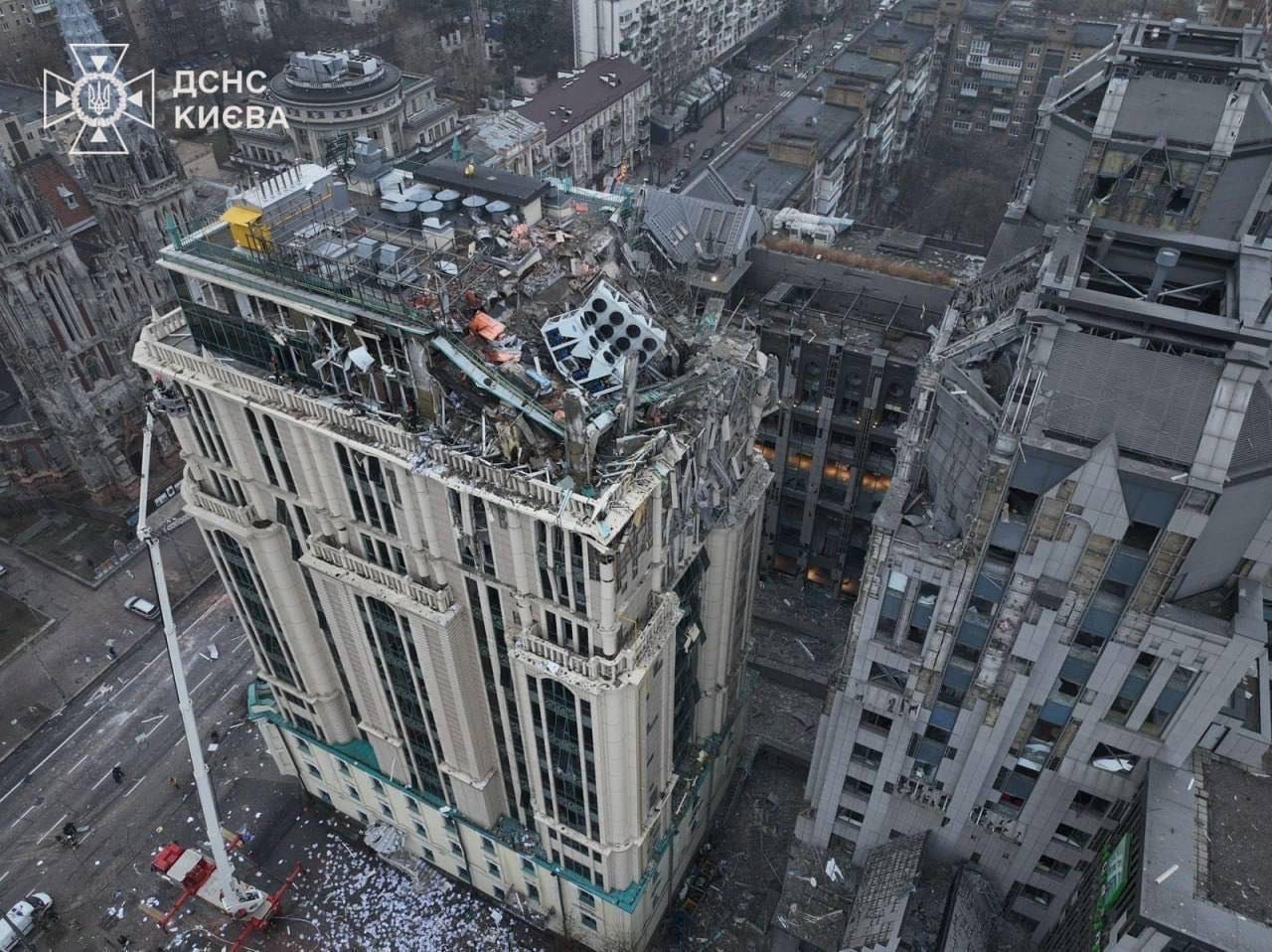
At 7 am on December 20, 2024, I was woken by the hotel’s air-raid alert in Room 504 at the Holiday Inn in Kyiv. I put a pillow over my head and tried to ignore it. Four minutes later, a missile hit the street in front of the hotel, tearing off the façade. Two minutes after that, a second missile struck the top floor of the building next door. Room 504 was on the back side of the hotel. My windows bulged more than I thought possible, but they held.
‘There was a desk attendant standing behind what was left of the front desk. I asked her, “How do we check out?” Her response was typically Ukrainian: “Check out of what?”’
I walked down the stairs to survey the damage. The elevator shaft had collapsed, and every piece of glass on the hotel’s street side was shattered. I stood there, trying to figure out what to do. I could not see anyone who was injured and needed help.
I assessed my emotional state. I was not scared or in shock; I was pissed off. Pissed off that that f****r Putin had almost killed me before I could have an impact.
There was a desk attendant standing behind what was left of the front desk. I asked her, “How do we check out?” Her response was typically Ukrainian: “Check out of what?”.
I dragged my duffel across the rubble, went to the office, then to a conference where I handed out money with Mariia Berlinska to the winners of a Victory Drones + MITS drone innovation contest. Investing in Ukraine’s ability to defeat Russia felt good.
3 | What decision, habit, or principle has mattered the most for you for surviving or staying effective under pressure?

Build a system, not a plan. A plan is a single bet on how events will unfold; a system adapts as new information comes in. One of the most important “lessons of Ukraine” is that Ukraine survives not because it uses drones, but because it is building an entirely new system of warfare.
I try to apply the same systems-level approach to my effectiveness that Ukraine applies to warfare. It requires being ruthless in triaging your time. Keep your eyes on the objective and don’t let anyone pull you off track.
4 | How can people support your work?

I am laser-focused on ending the root cause of Ukraine’s suffering by defeating Russia in Ukraine. If you share the objective, we have lots of ways to help.
Ukraine needs capital to scale its defense tech industry. It needs to control that capital if it is going to retain its defense technology. We have many opportunities to invest in Ukrainian defense tech companies to keep them Ukrainian. Send potential investors our way.
For those in the defense industry outside Ukraine who want to support Ukraine, don’t send drones: please buy Ukrainian. Our portfolio of companies produces a broad range of China-free components for the drone supply chain and several unique USVs, UGVs, and UAVs. Please direct potential customers our way.
5 | Where can people follow you?
I post quite a bit on LinkedIn about Ukraine, the new system of war, and geopolitics:
https://www.linkedin.com/in/perryboyle/

UFN Daily Notebook—
What else we’re watching today:
Ukraine Offers a Black Sea Truce—Ukraine has proposed a mutual halt to attacks on civilian vessels and infrastructure in the Black Sea, using a third party to transmit the offer after escalating strikes nearly paralyzed agricultural shipping on both sides. Ukraine’s grain exports have fallen 76 percent year over year in August as shipowners avoid Odesa following repeated Russian attacks, while Ukrainian strikes temporarily closed all three terminals at Novorossiysk. Moscow has since dismissed the idea, rejecting any “half-measures” that might give Ukraine breathing space.
A monitored maritime truce could protect global food supplies and Ukraine’s economy, but only if violations trigger immediate consequences. Russia abandoned the previous grain agreement in 2023.
Europe’s Crises Take No Holiday—Europe’s leaders have scattered for their summer holidays while wildfires, migration pressure, war in Ukraine, and instability in the Middle East continue testing the continent. Heads of government are entitled to rest, and modern communications keep them reachable, but the political risk is obvious: a leader photographed at leisure while citizens face evacuation, disorder, or economic pain can quickly appear detached and unserious.
The deeper problem is institutional rather than photographic. Europe increasingly confronts year-round security threats with governments still operating on a peacetime calendar, leaving crisis management dependent on hurried returns and improvised coordination.
The End of Cheap Chinese Drone Dependence—President Trump has imposed tariffs of up to 100 percent on imported drones and components, targeting systems over 25 kilograms, thermal-imaging platforms, docking stations, and other technology considered especially sensitive to national security. Smaller drones and components face a 25 percent duty, while products genuinely originating in allied economies receive lower rates.
The policy confronts an uncomfortable reality exposed by Ukraine: drones have become basic instruments of military power, infrastructure protection, policing, agriculture, and industry, yet Chinese companies dominate America’s commercial market and much of the component supply chain. Beijing’s ability to restrict exports—or potentially exploit data and software access—makes that dependence strategically reckless.
Can 100,000 Missions Become a Global Business?—Ukrainian autonomy specialist Swarmer increased its second-quarter revenue, to $216,000. The company also invoiced $1.5 million through its expanding SkyKnight licensing program, collected $1.4 million, and raised the program’s contracted value from $2.9 million to $3.9 million. Swarmer’s software has now supported more than 100,000 combat missions, while new partnerships are bringing its technology into U.S. Special Operations platforms and American-compliant onboard computing. Its $7.3 million quarterly loss reflects heavy spending on engineering, personnel, and integration, so the company must still turn pilots and partnerships into sustained procurement.
Yet the trajectory is encouraging: battlefield-proven Ukrainian autonomy is beginning to acquire the contracts, capital, and Western industrial connections needed to become a scalable defense business.
NATO Just Let Private Companies Shoot Down Drones, With Their Own Pilots—Latvia tested drone interceptors against Shahed-style targets during NATO’s Baltic Trust 26 exercises at the Selija range, releasing video of a successful intercept. Around 650 personnel took part — from Latvia, NATO members, and partners including Ukraine, Australia, and Japan — trialing radars, sensors, cameras, and EW systems.
The novel part wasn’t the hardware. The exercise tested a format new to NATO: once a target is detected, soldiers can hand the engagement to private companies, who fly their own interceptors with their own pilots and engineers.
Latvia is moving fast on this. In July it signed memoranda with Ukraine on UAV development and technology transfer; in June, the two announced plans for joint drone production in Latgale.
Ukraine solved counter-Shahed interception under fire. Latvia is importing the technology — and the doctrine.

underfire.news | PayPal | X | Instagram | LinkedIn | Youtube | Facebook